How to measure a pallet
Carriers measure the space your freight blocks, not the box inside it. Measure it their way and the invoice matches your quote.
Measure after wrapping, not before
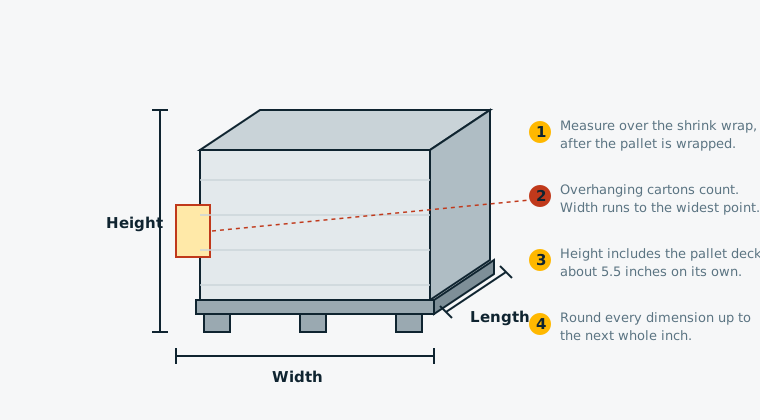
Shrink wrap adds an inch or more on each side once it is pulled tight over corners, and a corner board adds more. The carrier measures what arrives at the dock, so measure at the same moment they will.
Include the pallet
The pallet is part of the shipment. A standard wooden pallet is about five and a half inches tall and weighs between 30 and 50 pounds. Leaving it out of both the height and the weight is the single most common measuring error.
Measure the widest point, including overhang
If a box hangs two inches past the pallet edge on one side, the width is the pallet plus two inches. Overhang also risks damage and handling surcharges, so it is worth fixing at the source rather than just measuring around it.
Round every dimension up
Carriers round up to the next whole inch. Rounding down to make a nicer number lowers your calculated cube, raises your calculated density, and produces a class you cannot defend when the shipment is inspected.
Weigh with the pallet on the scale
Use a certified scale. Estimating the weight from a packing list ignores the pallet, the wrap and the dunnage, and estimates skew low almost every time.
Once you have the four numbers, the calculator turns them into cubic feet, density and a class, and tells you whether you are sitting close enough to a boundary that an inch would change the answer.